BreatheOut!
Your Personal Breathing Sanctuary
For crisis moments and daily balance. Find instant calm when you need it, and build lasting peace through daily practice.
From panic attacks to work stress, from insomnia to daily wellness - breathing techniques that work when you need them most.
Why BreatheOut?
A peaceful sanctuary for your daily breathing practice
Your Personal Shelter
A stress-free, peaceful space for crisis moments and daily practice. No ads, no distractions, just you and your breath when you need it most.
Instant Relief When You Need It
From panic attacks to work stress - Navy SEAL techniques that work in 60 seconds. Plus daily practices for long-term balance.
Ancient Wisdom, Modern Life
Breathing techniques from Yoga, Qigong, and Eastern traditions - for both crisis management and daily wellness.
For Everyone, Every Moment
Whether you need instant calm from anxiety, help with sleep, work stress relief, or daily balance practice - BreatheOut is here for you.
No Cloud Required
Techniques from Yoga, Qigong, and Eastern traditions
No Tracking, No BS
Key Features
Everything you need for crisis & daily practice

10+ Breathing Techniques for Crisis & Daily Balance
From Navy SEAL's Box Breathing to ancient Pranayama - techniques for focus, sleep, energy, and daily balance. Each with visual and audio guidance.
Your Personal Breathing Companion - Available 24/7
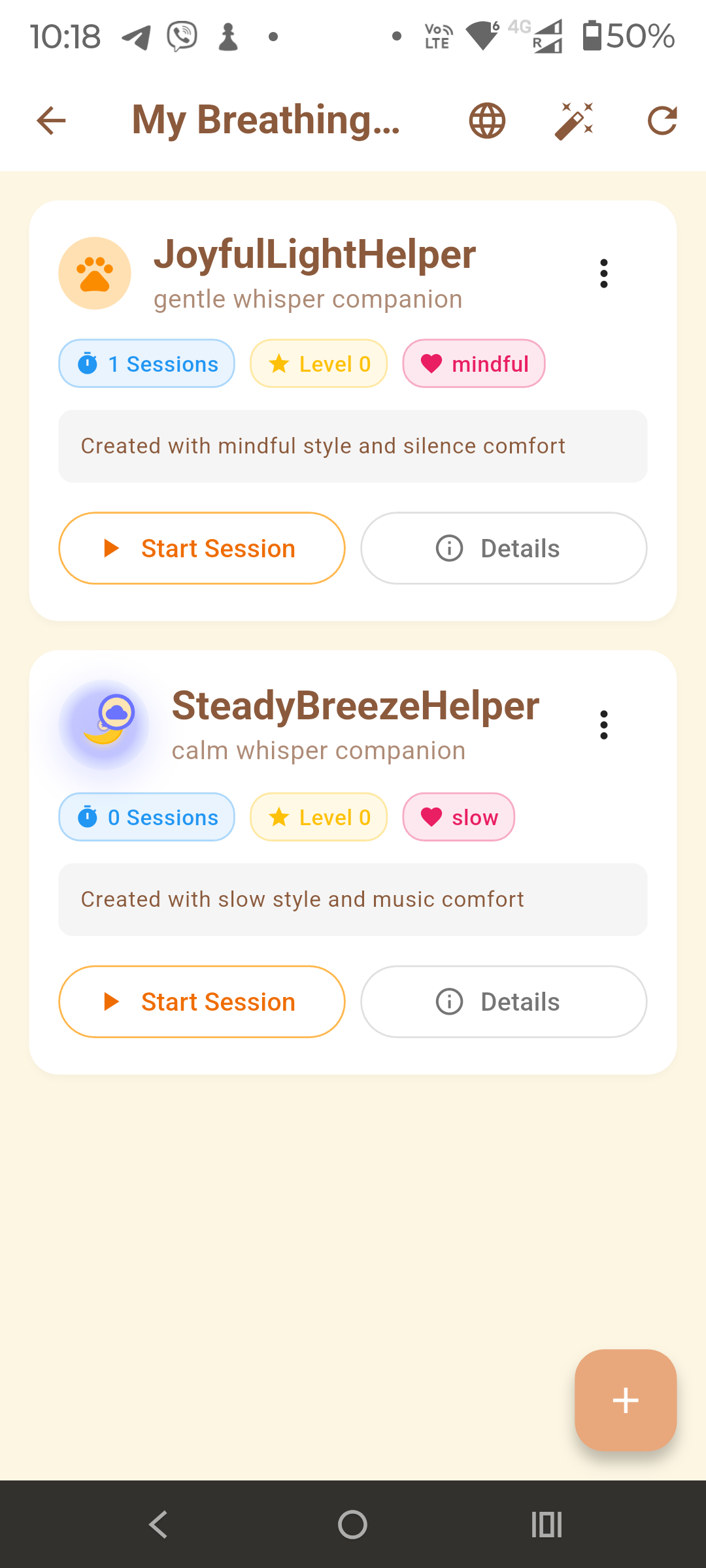
Create personalized breathing companions with unique personalities. There when you need them most - for crisis moments and daily practice.
Track Your Journey - From Crisis to Daily Balance
Track your sessions with detailed statistics, streak counters, mood tracking, and visual progress charts. See your improvement over time.
Natural Sounds for Crisis Moments & Daily Practice
Choose from 15+ background sounds including Ocean Waves, Forest Birds, Rainfall, and White Noise. Perfect for both instant calm and daily practice.
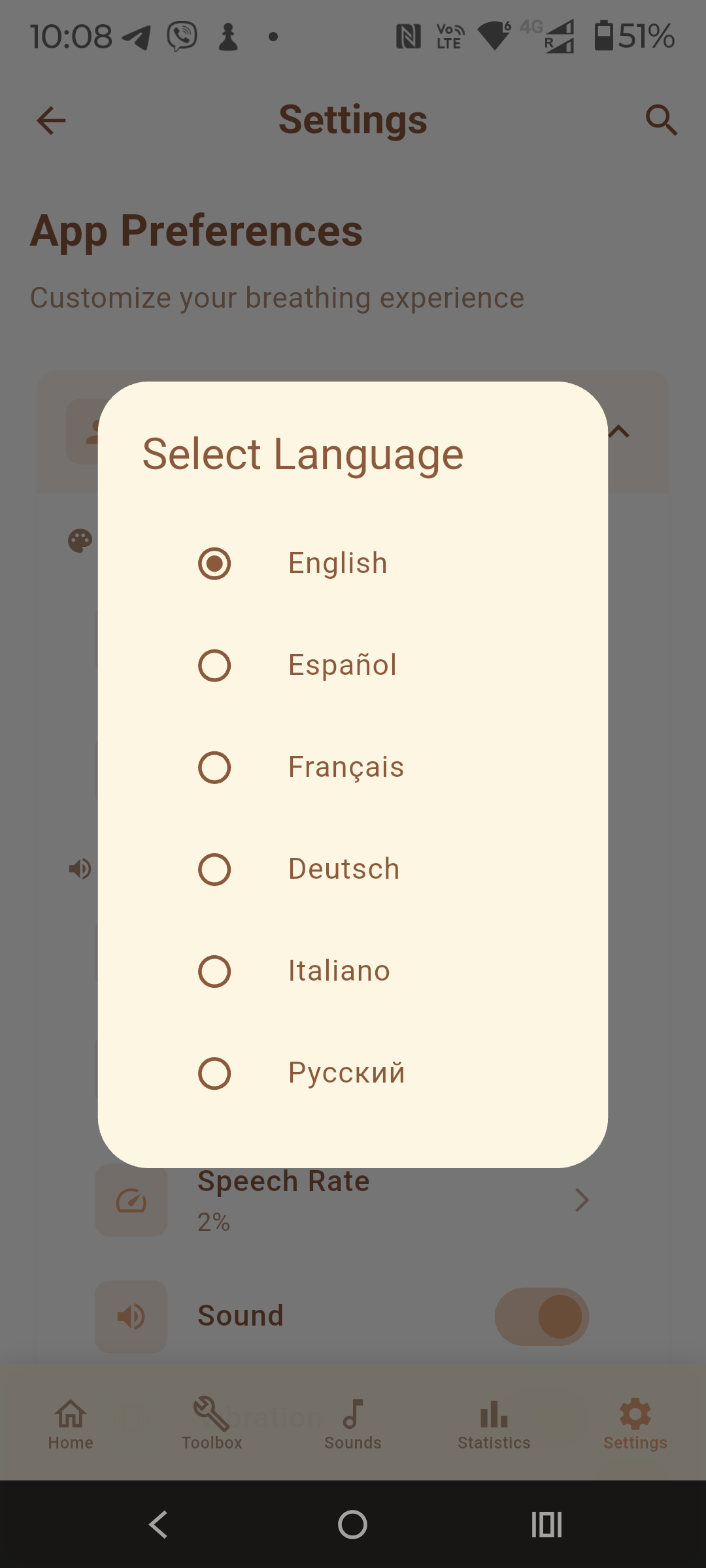
Practice in Your Native Language - 6 Languages
Voice-guided instructions in English, Spanish, French, German, Italian, and Russian. Accessible to everyone, everywhere.
Make It Your Own - For Crisis & Daily Practice
Adjustable voice guidance, light and dark themes, personalized breathing patterns, and session duration. Flexible for all your needs.
See It In Action
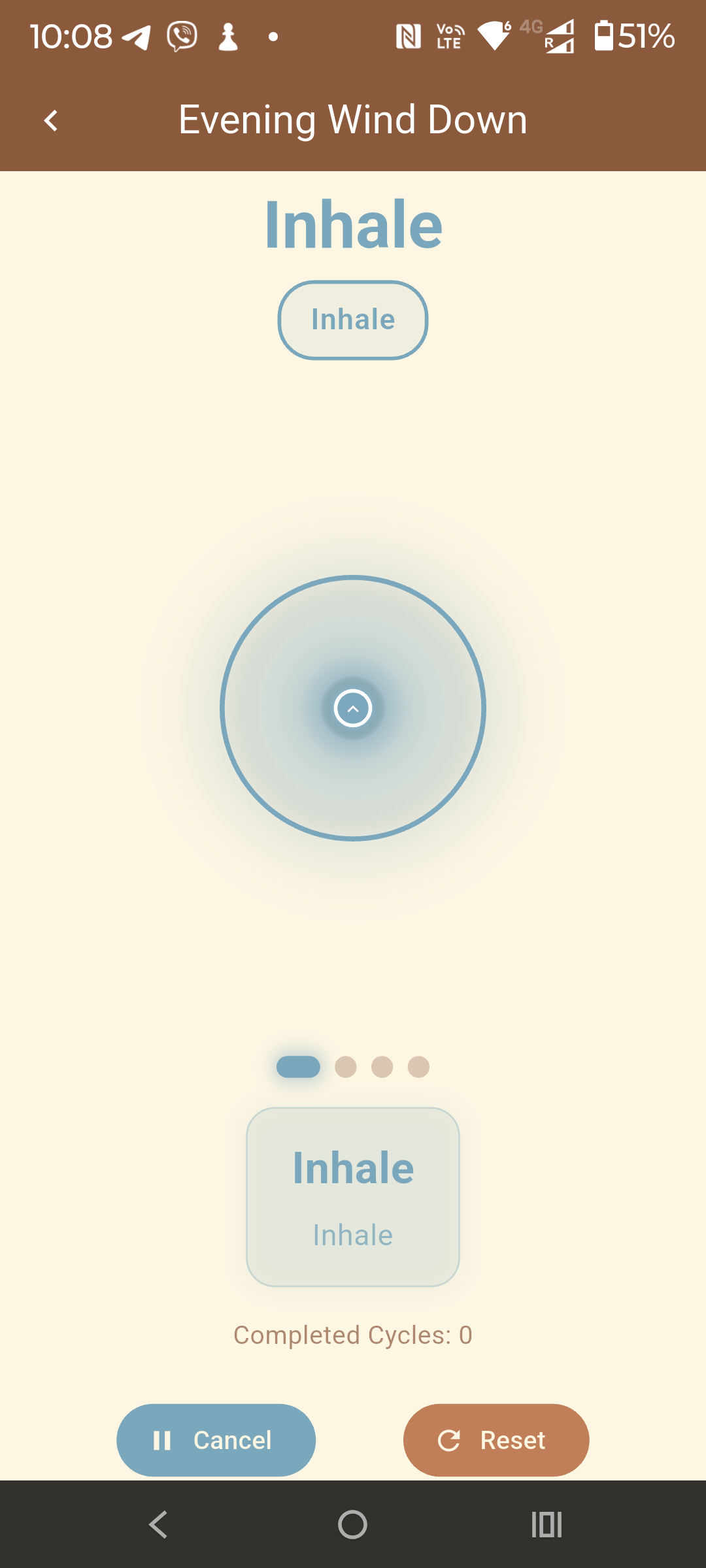
Don't meditate. Just follow the sphere. Our visual cues guide you to calmness.
Watch the breathing sphere guide you to calm
Add breathing-demo.mp4 to /public/videos/ to show your video here
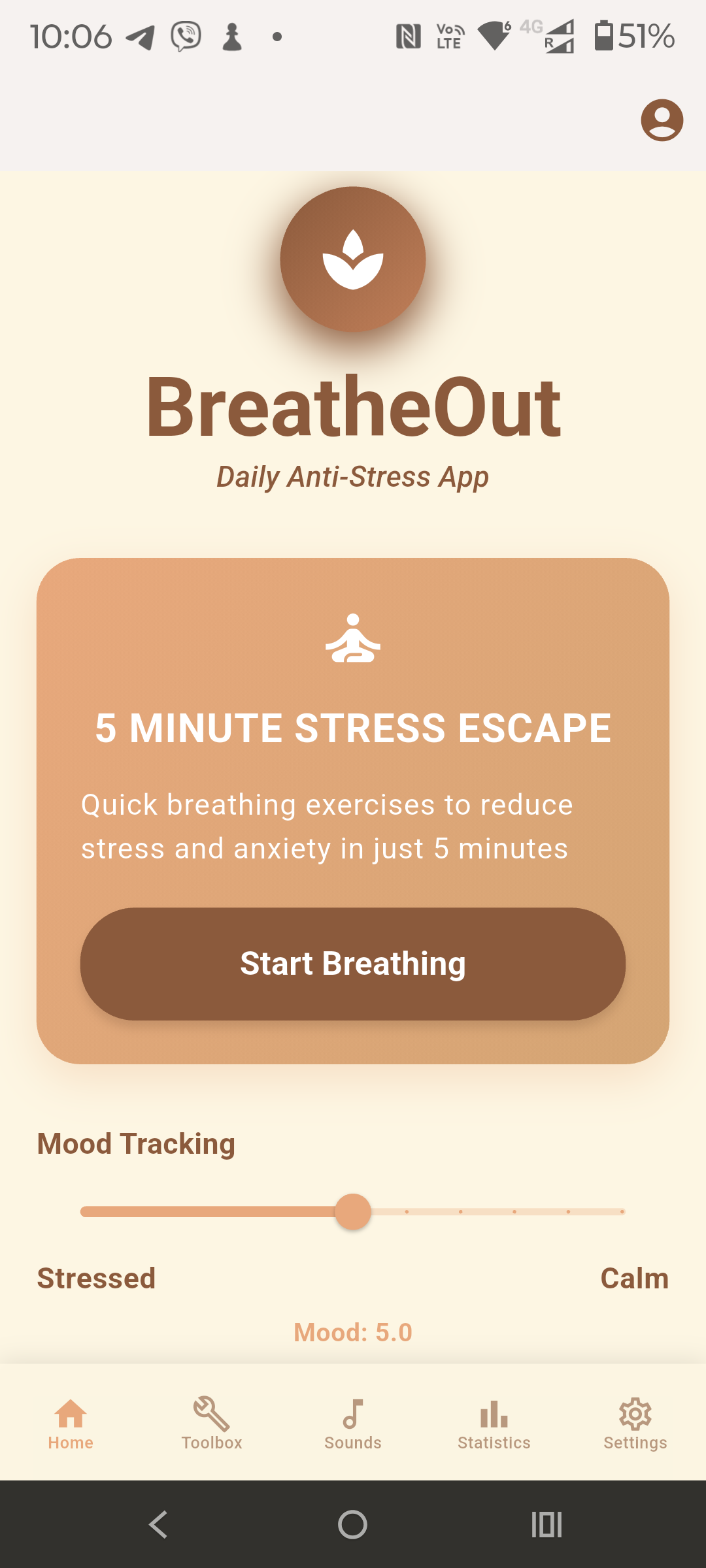
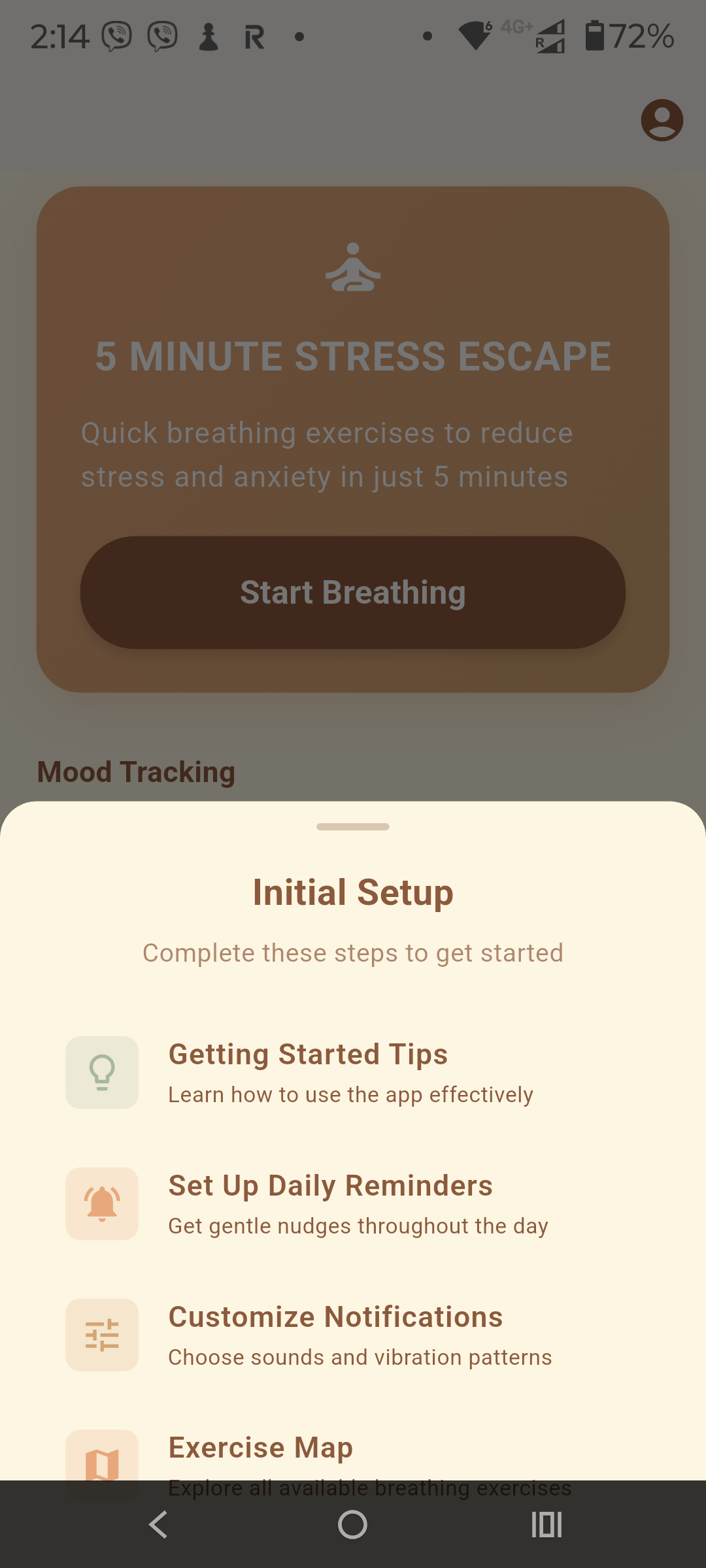
App Screenshots
Explore the app interface and features
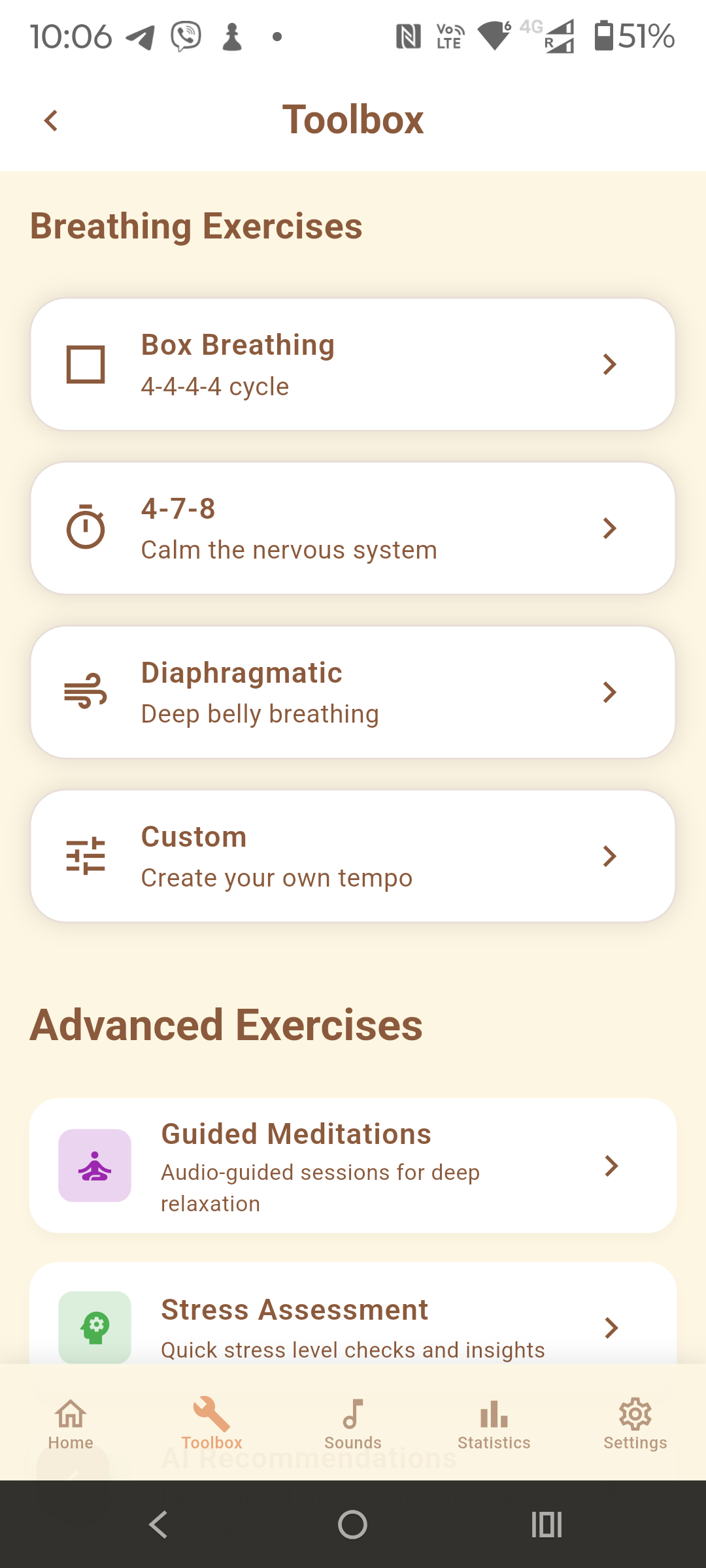
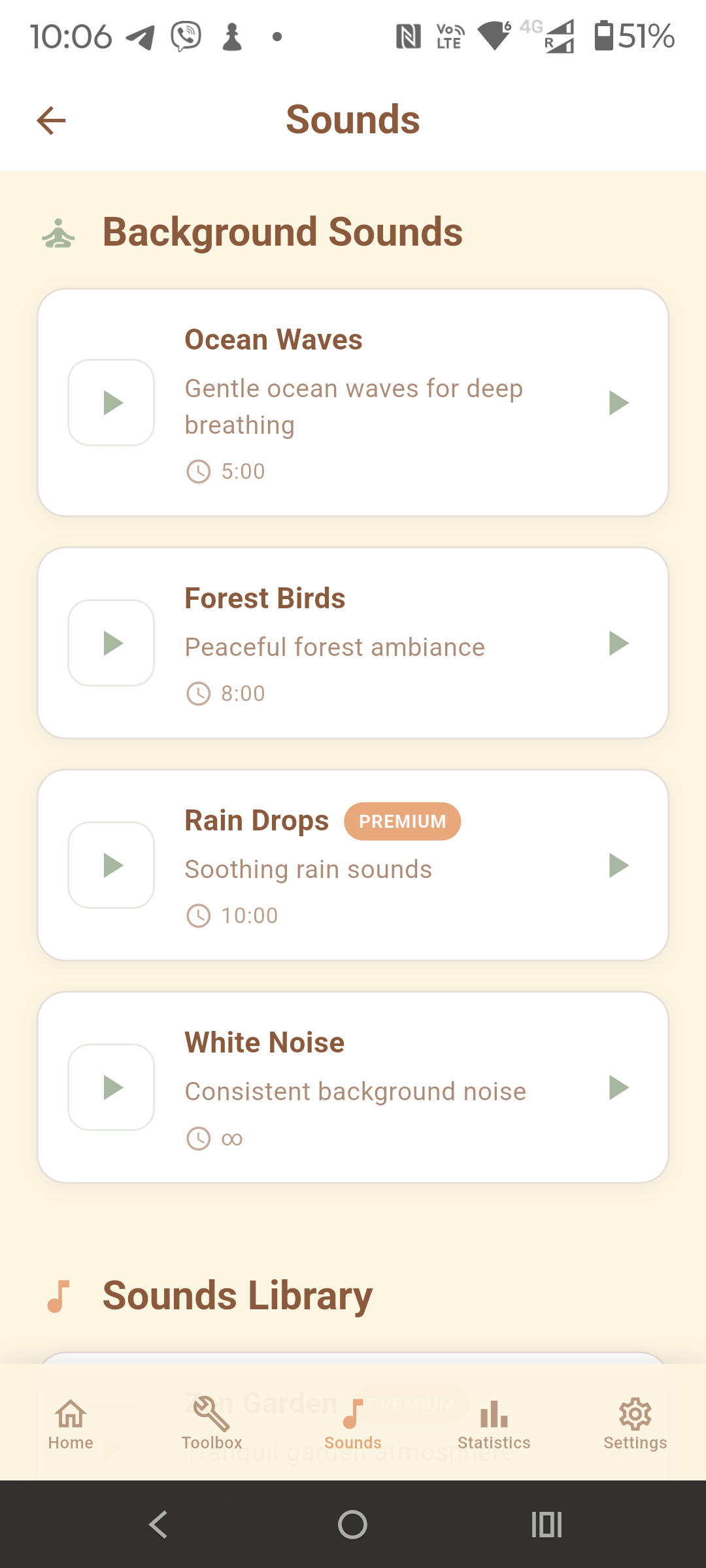
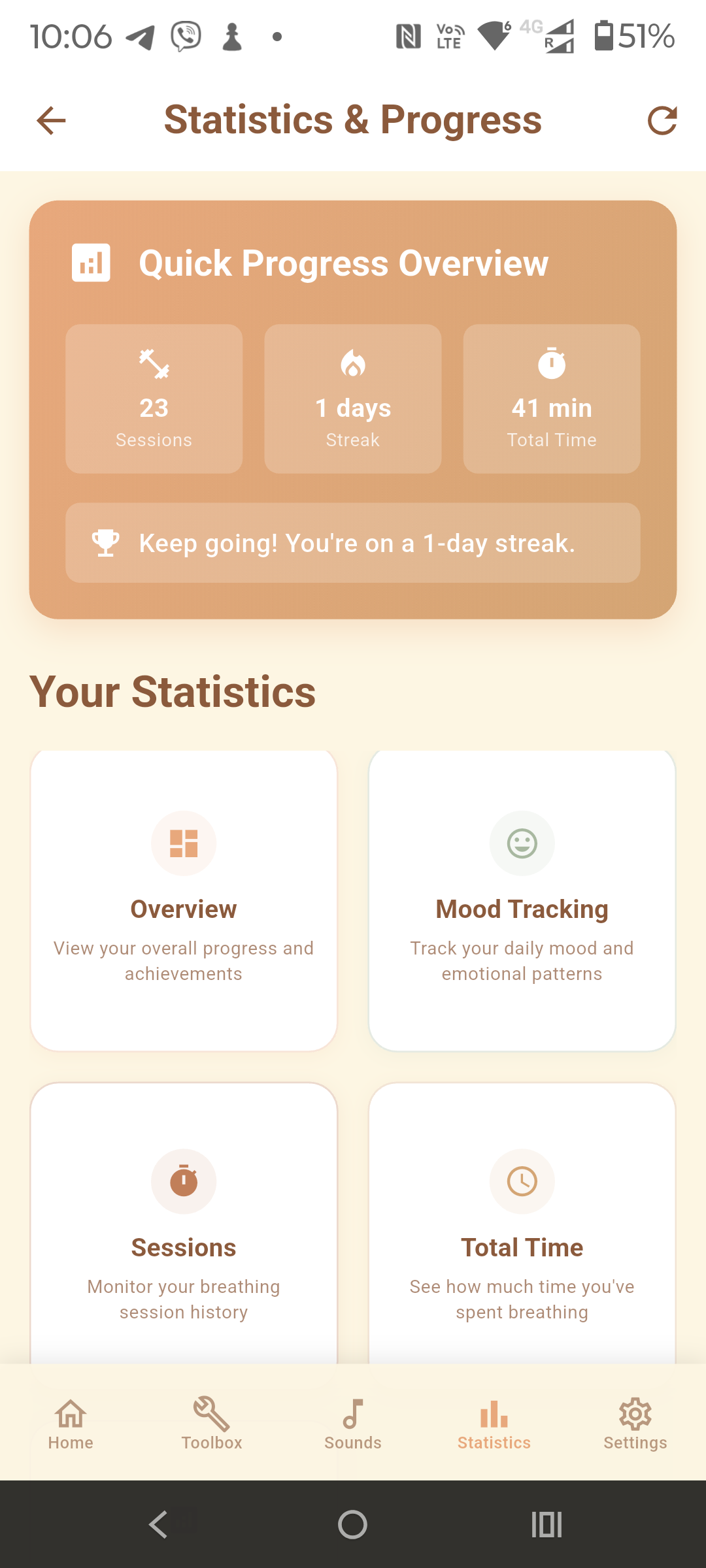
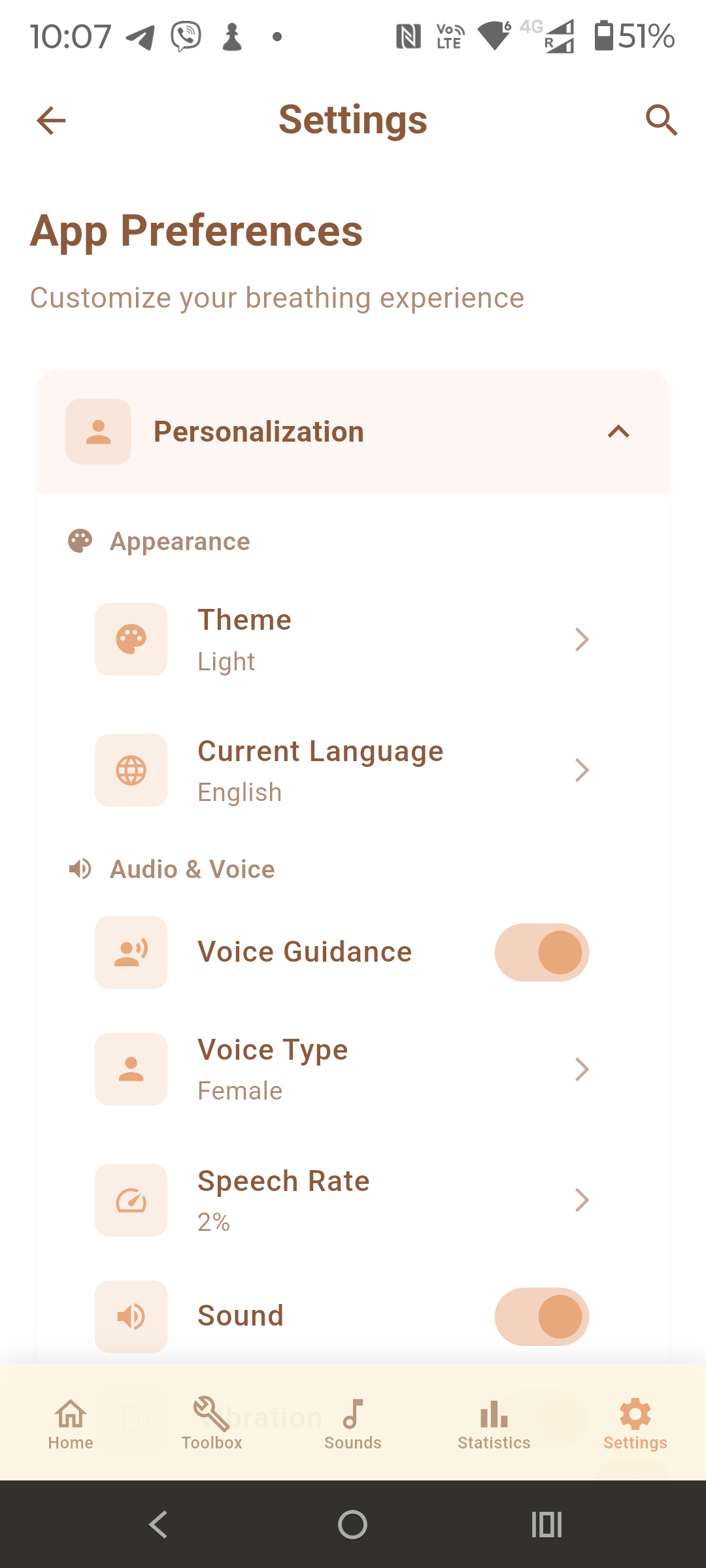
Discover Your Perfect Breathing Practice
Answer 5 quick questions to get your personalized breathing plan
1. What brings you to breathing practice today?
Breathing Techniques
Explore scientifically-backed breathing methods from ancient traditions and modern research
Box Breathing (4-4-4-4)
Also known as square breathing, this technique involves inhaling, holding, exhaling, and holding again—each for four counts. Originally used by Navy SEALs to maintain calm under pressure, box breathing activates the parasympathetic nervous system, helping to reduce stress and improve focus. The equal-length phases create a sense of balance and control.
4-7-8 Breathing
Developed by Dr. Andrew Weil, this technique follows a pattern of inhaling for 4 counts, holding for 7 counts, and exhaling for 8 counts. The extended exhale activates the body's relaxation response by stimulating the vagus nerve. This method is particularly effective for falling asleep and managing acute stress or anxiety.
Alternate Nostril Breathing (Nadi Shodhana)
A foundational pranayama practice from ancient India, Nadi Shodhana involves breathing through one nostril at a time while closing the other. This technique balances the left and right hemispheres of the brain, harmonizes the nervous system, and purifies the energy channels (nadis). It's considered one of the most balancing breathing practices in yoga.
Deep Breathing (Diaphragmatic Breathing)
Rooted in pranayama practices, deep breathing involves fully engaging the diaphragm to maximize lung capacity. This technique has been practiced for thousands of years in India as part of yoga and meditation. It activates the body's relaxation response and is fundamental to many Eastern breathing practices.
Resonant Breathing (6 Breaths per Minute)
This technique, practiced in Chinese Qigong and traditional Chinese medicine, involves breathing at a rate of 6 breaths per minute (5 seconds inhale, 5 seconds exhale). This rhythm creates coherence between the heart rate and breathing, optimizing the cardiovascular system and promoting a state of calm alertness.
Calm Breathing (Extended Exhale)
This technique emphasizes a longer exhale than inhale, typically in a 2:1 or 3:2 ratio. The extended exhale activates the parasympathetic nervous system more effectively than equal-length breathing. This method is particularly useful for immediate stress relief and emotional regulation.
Energizing Breathing
Quick, shallow breaths through the nose can increase alertness and energy. This technique is useful when you need to wake up, increase focus, or prepare for physical activity. It's the opposite of calming techniques and activates the sympathetic nervous system in a controlled way.
Breathing & Emotional Intelligence
Emotional Intelligence (EI) is the ability to recognize, understand, and manage our own emotions, as well as recognize and influence the emotions of others. Breathing exercises are one of the most powerful tools for developing emotional intelligence.
Conscious breathing creates a bridge between the mind and body, allowing us to observe our emotional states in real-time. When we pay attention to our breath, we become more aware of stress, anxiety, or tension as it arises. This awareness is the foundation of emotional intelligence.
Research shows that controlled breathing directly impacts the autonomic nervous system, which regulates our emotional responses. By consciously changing our breathing pattern, we can shift from a stressed state (sympathetic activation) to a calm state (parasympathetic activation), giving us greater control over our emotional reactions.
Breathing exercises help develop the ability to regulate emotions by activating the body's natural relaxation response. When we practice breathing techniques regularly, we train our nervous system to respond more calmly to stressors. This creates a buffer between stimulus and reaction, allowing for more thoughtful and emotionally intelligent responses.
The practice of mindful breathing also enhances empathy and social awareness—key components of emotional intelligence. As we become more attuned to our own emotional states through breathing, we develop greater sensitivity to the emotional states of others, improving our relationships and communication.
BreatheOut integrates emotional intelligence principles by encouraging mood tracking before and after sessions, helping users develop greater self-awareness and emotional regulation skills through consistent breathing practice.
Rooted in Ancient Wisdom
Breathing practices from India, China, and other Eastern traditions that have been refined over thousands of years
Pranayama
Pranayama, meaning "extension of life force," is a cornerstone of yoga practice dating back over 5,000 years. The ancient yogis discovered that controlling the breath (prana) could influence the mind, body, and spirit. Practices like Nadi Shodhana (alternate nostril breathing) and Kapalabhati (skull shining breath) were developed to balance energy channels, purify the body, and achieve higher states of consciousness. These techniques are now validated by modern science for their stress-reducing and health-promoting effects.
Qigong Breathing
Qigong, meaning "life energy cultivation," is a 3,000-year-old Chinese practice that combines breathing, movement, and meditation. The breathing techniques in Qigong are designed to cultivate and balance Qi (life force energy) throughout the body. Practices like "Turtle Breathing" and "Reverse Breathing" are used to strengthen internal organs, improve circulation, and harmonize the body's energy systems. Modern research shows Qigong breathing can improve heart rate variability and reduce stress hormones.
Mindful Breathing (Anapanasati)
Anapanasati, or "mindfulness of breathing," is a core meditation practice in Buddhism that dates back 2,500 years. The Buddha himself taught this technique as a primary method for developing concentration and insight. By observing the natural breath without trying to control it, practitioners develop present-moment awareness and emotional equanimity. This practice forms the foundation of modern mindfulness-based stress reduction (MBSR) programs.
Tummo (Inner Fire) Breathing
Tummo, or "inner fire," is an advanced Tibetan Buddhist breathing practice that generates internal heat and energy. While the full practice is complex, the breathing techniques involved have been adapted for stress reduction and focus enhancement. These methods involve specific breath retention patterns and visualization techniques that can significantly impact the nervous system and mental clarity.
Zazen Breathing
In Zen meditation (zazen), breathing is central to the practice. The emphasis is on natural, abdominal breathing that occurs without force or manipulation. This "just sitting" approach to breathing helps practitioners develop a calm, alert state of mind. The simplicity and naturalness of Zen breathing make it accessible and profoundly effective for modern stress management.
Science Meets Tradition
BreatheOut brings together the wisdom of these ancient traditions with modern scientific understanding. Research in neuroscience, psychology, and physiology now validates what Eastern practitioners have known for millennia: conscious breathing is a powerful tool for transformation. Our app makes these time-tested techniques accessible to everyone, with guided instructions and personalized support for your wellness journey.
Why Breathing Exercises?
Reduce stress and anxiety
Improve focus and concentration
Lower blood pressure
Enhance sleep quality
Boost emotional regulation
Increase energy levels
Frequently Asked Questions
Is BreatheOut free?
+Yes! BreatheOut has a free version with all essential breathing techniques. Premium features are optional and unlock advanced techniques and analytics.
Does it work offline?
+Absolutely! All breathing exercises work completely offline. No internet connection required.
Is my data private?
+100% private. You can use the app as a guest (data stays on your device) or create an account for optional cloud backup. We never sell your data or show ads.
How long until I see results?
+Most users feel calmer within the first 5-minute session. For lasting benefits, practice daily for 1-2 weeks.
Do I need meditation experience?
+Not at all! Just follow the breathing sphere. No "clearing your mind" required. The visual guide does the work.
🔐 Your Data, Your Choice
BreatheOut is built with privacy in mind. Use as a guest for local-only storage, or create an account for optional cloud backup. All data is encrypted, and we never share your information with third parties. No ads, no tracking, just your wellness journey.